The Hidden Dangers of Dead Trees — and Why Waiting to Remove Them Costs More
Most homeowners notice a dead tree on their property and file it under “I’ll deal with that eventually.” It is not causing any immediate problems, nothing has fallen yet, and there are always more pressing things to spend money on. But dead trees do not sit in a stable state waiting for you to get around to them. They are actively deteriorating — and the longer they stand, the more dangerous and more expensive they become to deal with.
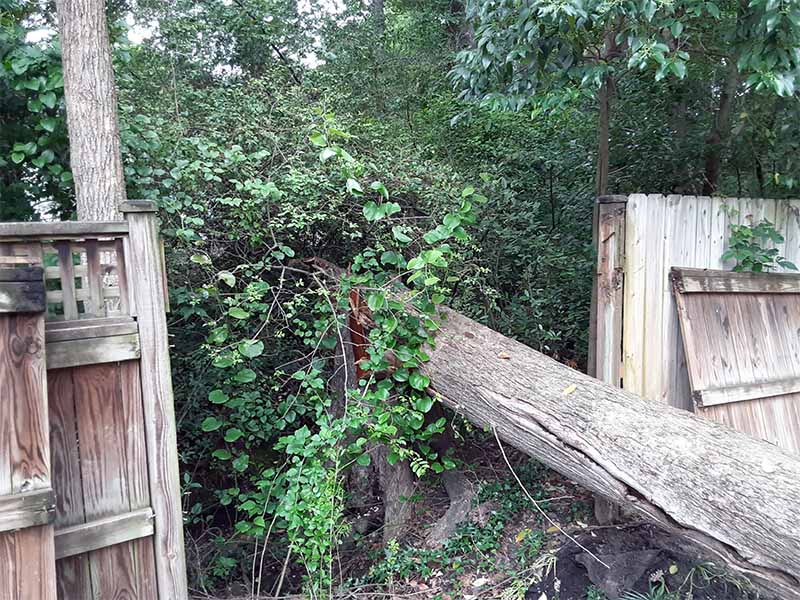
Dead Trees Are Not Just Ugly — They Are Structural Failures in Progress
A living tree is a remarkably strong structure — flexible wood fibers, a deep root system, and a canopy that distributes weight evenly. A dead tree loses all of that. The root system decays first, often invisibly underground, which means the anchoring fails before anything above ground looks wrong. The wood becomes brittle instead of flexible, so it snaps in wind rather than bending. Branches become deadfall that can drop without warning on a calm day. The danger is not that it might fall someday — it is that you cannot predict when.
What Dead Trees Actually Cost When They Come Down on Their Own
A planned removal — crew shows up on a scheduled day, takes it down in a controlled manner — is a straightforward job with a predictable cost. An emergency removal after the tree has fallen on a roof, a car, or across a driveway is a fundamentally different situation. Emergency rates run two to three times higher because the work is more dangerous and time-sensitive. But the removal cost is only part of it. A tree through a roof means structural repairs, water damage, insurance deductibles, and weeks of disruption. A tree on a car is a total loss. A tree across a power line means utility involvement and liability questions. The collateral damage can multiply the removal cost by ten.
Insurance Does Not Always Cover What You Think It Does
Most homeowner’s policies cover damage caused by a fallen tree — but many cap what they will pay for the removal itself, separate from structural repairs. If a dead tree falls on your neighbor’s property, liability gets complicated fast, especially if it can be shown you knew the tree was dead and did nothing. Some insurers now ask about tree condition during inspections, and an unaddressed dead tree can affect your coverage terms. The insurance math alone makes planned removal the cheaper option — but most homeowners do not learn that until they are filing a claim.
The Pest and Disease Problem
Dead trees are not just a structural risk — they are habitat. Carpenter ants, termites, bark beetles, and wood-boring insects colonize dead wood and use it as a staging ground. A dead tree twenty feet from your house is an active insect incubator that can lead to infestations in the home itself. Fungal decay also produces spores that spread to healthy trees nearby. What starts as one dead tree can trigger declining tree health across the yard if the source is not removed.
How to Know If a Tree Is Dead or Dying
Some signs are obvious: no leaves in summer, bark falling off in sheets, fungal growths at the base. Others are subtler — a new lean may indicate root decay, a hollow sound when tapped means the trunk is losing structural wood, and vertical cracks suggest the tree is splitting under its own weight. If you are unsure, a certified arborist can assess the situation in minutes. For homeowners in the Durham and Triangle area dealing with storm-prone conditions, prompt dead tree removal is one of the most cost-effective preventive measures you can take before storm season arrives.
The Bottom Line
A dead tree is a liability that gets more expensive every day you leave it standing. The removal cost on a planned timeline is predictable and manageable. The cost after it falls — in emergency service, property damage, insurance headaches, pest infestations, and potential liability to neighbors — is none of those things. If there is a dead tree on your property, the cheapest day to remove it was yesterday. The second cheapest day is today.